Step 01
The enzyme is activated
PGHS contributes to the formation of prostaglandins that drive inflammation and pain signals.
A visual explanation of the chemistry behind acetylsalicylic acid — the molecule behind ASA.P®.
Acetylsalicylic acid has been used for more than 100 years and is one of the world’s most well-known active substances. ASA.P® builds on this established chemistry in a stabilised topical form, developed for local treatment directly on the skin.
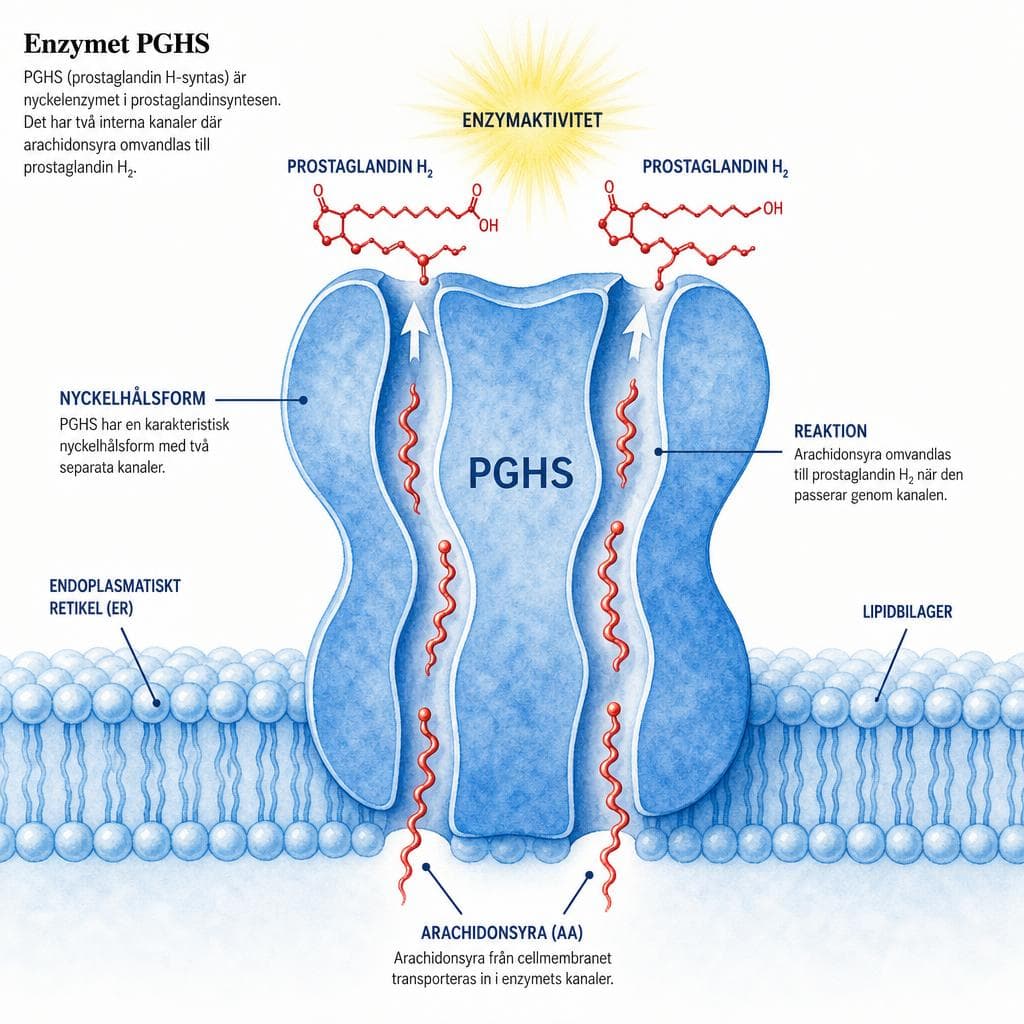
When tissue is damaged, biological processes are activated that may lead to inflammation and pain.
A central part of this process is the PGHS enzyme, also known as prostaglandin H₂ synthase. The enzyme is involved in the formation of prostaglandins — signalling molecules that contribute to inflammation and pain signals.
Arachidonic acid is converted via PGHS into prostaglandin H₂, which may then contribute to local inflammatory reactions.
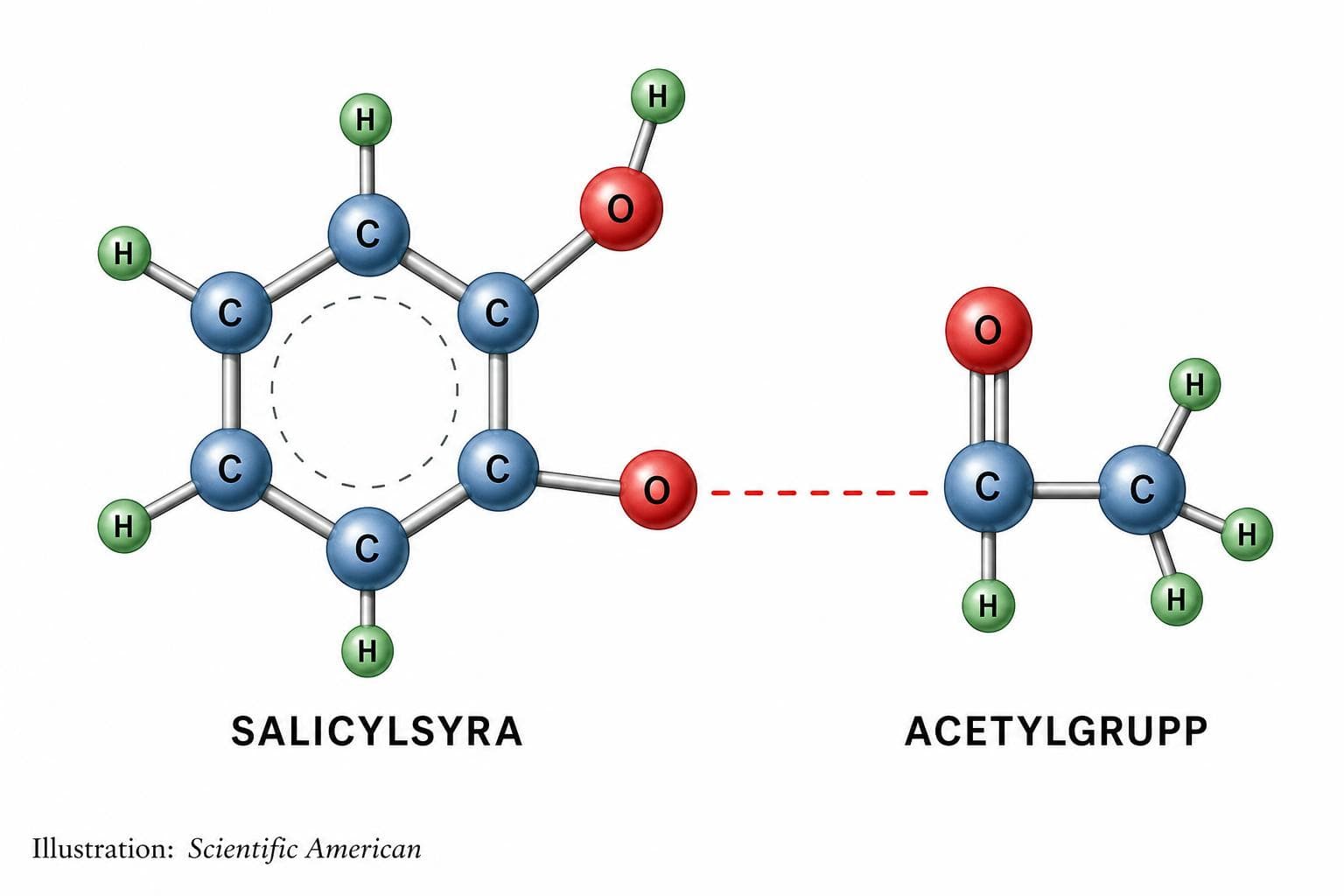
Acetylsalicylic acid consists of an acetyl group connected to salicylic acid.
When the molecule reaches the PGHS enzyme, the acetyl group can be transferred to a specific site in the enzyme channel.
This changes the function of the enzyme and affects its ability to continue forming prostaglandins.
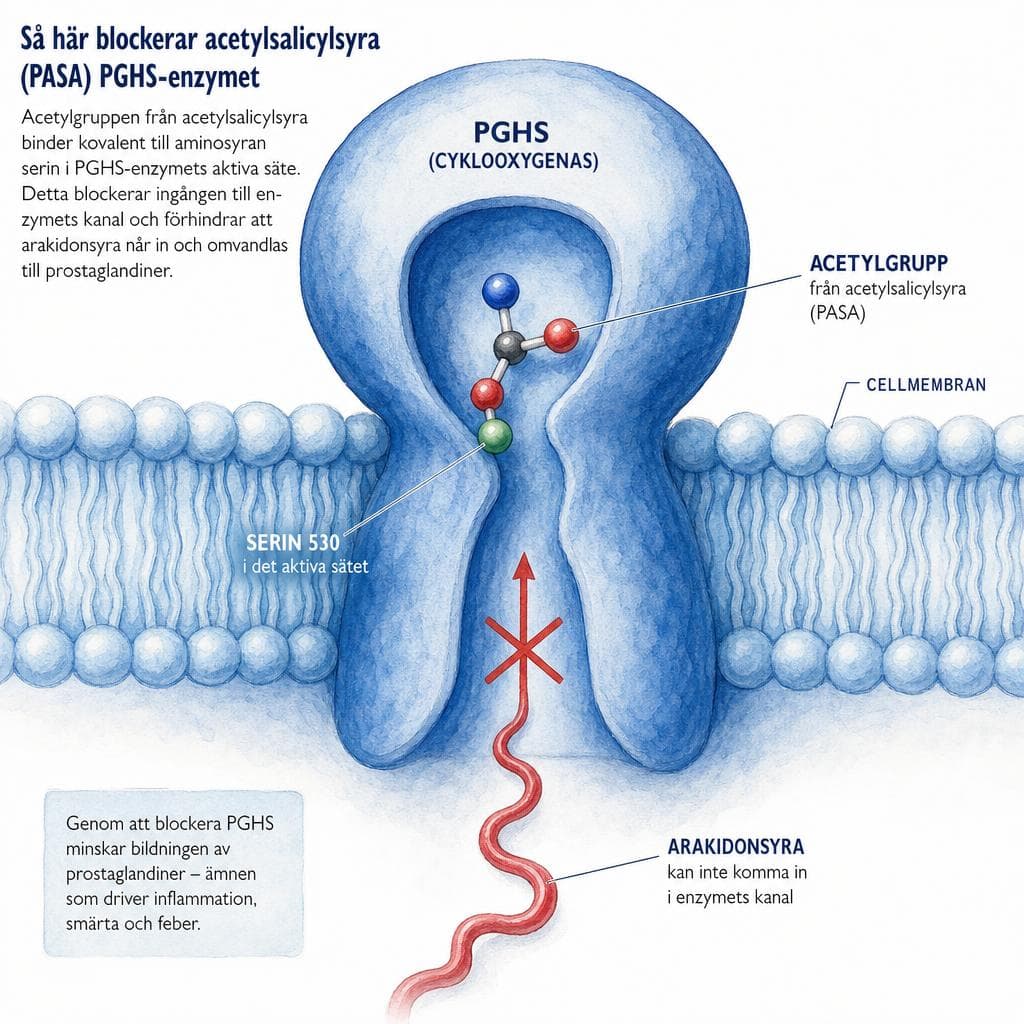
The acetyl group transferred from acetylsalicylic acid binds covalently to a specific amino acid in the enzyme, often described as serine 530.
When this site is altered, arachidonic acid is prevented from reaching the enzyme’s active centre.
The result is reduced formation of prostaglandins, which helps stop the local pain process.
From enzyme activity to chemical blocking — this is how the effect of acetylsalicylic acid is connected.
Step 01
PGHS contributes to the formation of prostaglandins that drive inflammation and pain signals.
Step 02
Acetylsalicylic acid transfers its acetyl group to the enzyme and changes its function.
Step 03
When the enzyme channel is blocked, prostaglandin formation is reduced and the pain process is locally slowed.
ASA.P® builds on the established mechanism of action of acetylsalicylic acid, but in a stabilised topical form. The goal is to apply the active substance locally where the pain occurs, without burdening the rest of the body in the same way as systemic treatment.